Introduction: The UK as a Global Hub for Entrepreneurship
Despite shifts in global geopolitics and the economic restructuring of the post-Brexit era, the United Kingdom remains a premier destination for global commerce. For ambitious entrepreneurs, investors, and corporate leaders, the British market offers a unique blend of historical stability, a massive venture capital ecosystem, and direct access to top-tier international talent. However, entering this market requires navigating a sophisticated legal framework. To establish or expand a commercial presence in London, Manchester, or Edinburgh, securing the appropriate UK business visa for expats is the essential first step.
In recent years, the Home Office has overhauled its migration system, replacing old routes like the Tier 1 Entrepreneur visa with more agile, innovation-focused pathways. This comprehensive guide details the modern landscape of the UK business visa for expats, providing actionable insights, legal pathways, and strategic tips to ensure a successful application.
1. The Modern Landscape: Which UK Business Visa is Right for You?
The current UK immigration system does not offer a one-size-fits-all solution. Instead, it categorizes visas based on the nature of the business, the applicant’s experience, and whether they are establishing a brand-new entity or expanding an existing international corporation.
For expats, understanding these distinctions is critical to avoiding costly application rejections. The primary routes are designed to attract high-value founders, senior executives, and specialist workers who can contribute tangibly to the UK’s economic growth.

The Shift Toward Innovation and Scalability
The Home Office now prioritizes businesses that bring genuine, innovative, and scalable concepts to the UK market. The evaluation criteria are no longer based solely on the amount of capital an expat can invest, but rather on the intellectual and commercial viability of the business model itself. This paradigm shift means that preparation, market research, and third-party endorsements are more critical than ever before.
2. Key Visa Pathways: A Comparative Analysis
To help prospective expats choose the correct legal route, we have outlined the core characteristics of the most prominent business visas available today. Each of these represents a different variation of the UK business visa for expats:
| Visa Category | Target Audience | Key Requirement | Path to ILR (Permanent Residency)? |
|---|---|---|---|
| Innovator Founder Visa | Entrepreneurs with original business ideas | Endorsement from an approved body | Yes (after 3 years) |
| Global Business Mobility (GBM) | Overseas managers expanding to the UK | Active foreign parent company | No (requires switching) |
| Skilled Worker (Self-Sponsorship) | Expats wanting to run their own sponsored firm | Valid Sponsor Licence for their UK business | Yes (after 5 years) |
| High Potential Individual (HPI) | Graduates from top-ranking global universities | Degree from a qualifying university | No (requires switching) |
3. Deep Dive: The Innovator Founder Visa
For expats looking to build a brand-new enterprise from the ground up, the Innovator Founder Visa is the gold standard. Launched to replace the older Innovator and Start-up routes, this visa streamlines the process for high-potential founders.
The Core Requirements
Unlike old programs that required a minimum of £50,000 in investment funds, the Innovator Founder visa has no set minimum investment capital requirement. However, applicants must demonstrate that they have sufficient funds to launch and sustain their business.
More importantly, your business concept must meet three fundamental criteria:
1. Newness: You cannot join an already trading business under this route; the idea must be entirely new or represent a significant pivot.
2. Innovativeness: The business must offer a unique proposition that addresses a market gap or improves upon existing solutions.
3. Viability and Scalability: You must present a structured business plan demonstrating potential for job creation and structured growth.
The Endorsement Process
Before applying to the Home Office, expats must secure an “Endorsement Letter” from an official, government-approved endorsing body. These are private sector organizations, such as accelerators and business incubators, tasked with vetting business plans.
“The UK continues to position itself as a premium destination for international entrepreneurial talent. Securing a UK business visa for expats is not just a bureaucratic step; it is an entry ticket to one of the world’s most robust venture capital ecosystems.”
— Immigration Advisory Council Executive Report
4. The Global Business Mobility (GBM) Routes
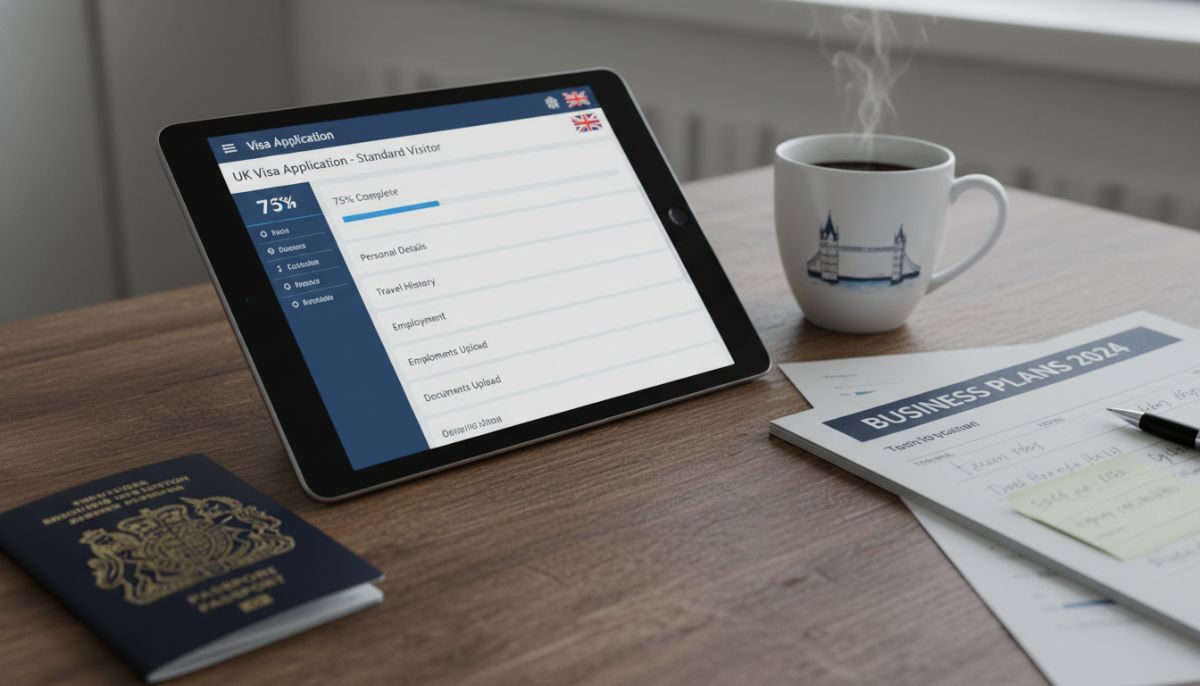
If you are an established business owner outside the UK looking to expand your footprint, the Global Business Mobility (GBM) routes are highly effective. Specifically, the UK Expansion Worker Visa (which replaced the Sole Representative visa) allows senior executives or specialist employees of an overseas business to move to the UK to establish the company’s first branch or subsidiary.
Important Nuances of the GBM Route
- No Direct Settlement: Unlike the Innovator Founder visa, the GBM Expansion Worker visa does not lead directly to Indefinite Leave to Remain (ILR). It is typically granted for 1 to 2 years.
The Strategy: Many expats use the GBM route to establish the UK entity, set up operations, and subsequently apply for a Sponsor Licence. Once the UK entity is licensed, the expat can switch into a Skilled Worker Visa, which does* offer a path to permanent residency.
5. The Rise of Self-Sponsorship: An Alternative Strategy
In recent months, the “Self-Sponsorship” route has gained massive popularity among expats seeking a UK business visa for expats without relying on third-party endorsing bodies.
How Self-Sponsorship Works
1. Incorporate a UK Company: The expat establishes a legal UK company from abroad.
2. Appoint an Authorising Officer: A UK resident (such as a director or legal representative) is appointed to handle the company’s initial immigration compliance.
3. Apply for a Sponsor Licence: The UK company applies to the Home Office for a licence to sponsor foreign workers.
4. Sponsor Yourself: Once the licence is approved, the company issues a Certificate of Sponsorship (CoS) to you (the expat founder) under the Skilled Worker route.
This legal strategy allows expats full operational control over their business while placing them on a direct, 5-year pathway to permanent British residency.
6. Crucial Steps to a Successful Application
Regardless of the specific pathway chosen, all applicants navigating the UK business visa for expats must adhere to a strict sequence of administrative and financial steps.

Step 1: Prove Your English Language Proficiency
You must demonstrate your command of the English language to at least CEFR Level B2 (equivalent to IELTS 5.5). This can be proven via approved language tests or by holding an academic degree taught entirely in English from a recognized institution.
Step 2: Satisfy the Maintenance Requirement
Expats must prove they can support themselves (and any dependent family members) without relying on UK public funds. Typically, this requires holding at least £1,270 in a personal bank account for 28 consecutive days before applying.
Step 3: Pass the Genuine Business Test
During the application process, Home Office caseworkers may invite you to an interview. They will scrutinize your background, your business experience, and your financial capability to ensure that your business intentions in the UK are entirely genuine.
Conclusion: Your Gateway to Global Growth
Securing a UK business visa for expats is an investment in your global commercial future. While the post-Brexit landscape demands more meticulous planning, structured compliance, and robust business modeling, the rewards of accessing the UK market are unparalleled.
By carefully aligning your professional credentials with the correct visa route—whether through the innovative pathway of the Innovator Founder visa, the corporate expansion framework of the GBM routes, or the strategic control of Self-Sponsorship—you can establish a thriving commercial presence in one of the world’s most dynamic business ecosystems. Proper preparation, coupled with qualified legal counsel, is the ultimate key to transforming your UK business aspirations into a reality.