In the ever-evolving world of business, safeguarding your company’s future is paramount. Enter the realm of commercial insurance, a treasure trove of security that shields your enterprise from unforeseen perils. Whether you’re a budding startup or a seasoned corporation, understanding the nuances of commercial insurance is your first step towards a fortified future.
Dive with us into the depths of the three essential types of commercial insurance, as we unravel the mysteries of their coverage, benefits, and indispensable role in risk management. As you journey through this guide, envision a safety net woven with precision, purpose, and the promise of prosperity.
Types of Commercial Insurance
Commercial insurance is the backbone of risk management for businesses, safeguarding them against unforeseen events and liabilities. With various types tailored to diverse industries, understanding these options is crucial for comprehensive protection.
Each type of commercial insurance offers unique coverage options, designed to address specific risks and operational needs. From property damage to liability claims, these insurances ensure that businesses can operate smoothly even in challenging circumstances. Let’s delve into the main types and their benefits.
Property Insurance
Property insurance is essential for businesses with physical assets, providing coverage against damages from natural disasters, theft, or vandalism. This type of insurance ensures that businesses can recover quickly, minimizing downtime and financial loss.
- Protects buildings, equipment, and inventory.
- Covers repair or replacement costs.
| Insurance Type | Coverage Details | Industry Use | Benefits |
|---|---|---|---|
| Property Insurance | Buildings, fixtures, equipment, inventory | Retail, manufacturing, hospitality | Minimizes financial loss, ensures fast recovery |
In one case study, a retail store faced significant water damage after a pipe burst. Thanks to their property insurance, they were able to cover the repair costs and resume operations within a week.
Liability Insurance
Liability insurance protects businesses against claims resulting from injuries or damages to other people or property. It is especially vital for service-oriented businesses to mitigate risks associated with their operations.
- Covers legal defense costs and settlements.
- Protects against bodily injury and property damage claims.
| Liability Insurance | Legal fees, settlements, medical expenses | Professional services, construction, healthcare | Prevents financial drain from lawsuits, protects reputation |
A notable example includes a construction company that avoided bankruptcy after a legal claim due to an accidental injury on-site, thanks to their comprehensive liability coverage.
Business Interruption Insurance
Business interruption insurance is a lifesaver for companies facing unforeseen events that halt operations. It covers lost income and operating expenses, helping businesses sustain cash flow during downtimes.
- Compensates for lost income during shutdowns.
- Covers temporary relocation expenses.
| Business Interruption Insurance | Income loss, rent, relocation costs | Restaurants, retail stores, manufacturing |
|
Consider a restaurant forced to close after a kitchen fire; their interruption insurance covered lost revenue and employee wages, allowing them to focus on rebuilding.
Importance of Commercial Insurance
In the bustling world of business, where risks lurk around every corner, having a safety net is not just an option, it’s a necessity. Commercial insurance acts as that crucial shield, protecting enterprises from potentially devastating financial losses.
From covering damages due to natural disasters to safeguarding against lawsuits, commercial insurance provides peace of mind, allowing businesses to focus on growth and success.
Mitigating Business Risks with Insurance
Every day, businesses face a myriad of risks that can impact their operations and profitability. Commercial insurance is designed to address these uncertainties by providing a financial safety net. Whether it’s property damage, employee injuries, or cyber threats, having the right coverage helps mitigate these risks effectively.
- Protection against unforeseen events that could halt operations.
- Financial coverage for legal liabilities and potential lawsuits.
- Support for business continuity and recovery.
Legal Obligations for Businesses
Beyond the peace of mind it offers, commercial insurance is often a legal requirement. Businesses are obligated to hold certain types of insurance to comply with laws and regulations. This is particularly true for industries with high risk factors or those employing a substantial workforce.
By adhering to these legal obligations, companies not only avoid hefty fines but also demonstrate their commitment to safeguarding their employees and assets.
| Risk Type | Insurance Solution | Legal Requirement | Business Impact |
|---|---|---|---|
| Natural Disaster | Property Insurance | Varies by location | Prevents operational shutdown |
| Workplace Injury | Workers’ Compensation | Mandatory in most regions | Reduces legal and medical costs |
| Data Breach | Cyber Liability Insurance | Not universally required | Protects against data loss and reputational damage |
| Product Liability | Product Liability Insurance | Required for manufacturers | Safeguards against lawsuits and recalls |
“Having commercial insurance isn’t just about compliance; it’s about securing a future for your business and its people.”
Cost Factors of Commercial Insurance
Understanding the cost factors of commercial insurance is crucial for businesses aiming to optimize their financial resources. These factors not only determine the premium but also influence how effectively a business can protect its assets.
Insurance providers evaluate multiple variables while calculating the costs of commercial insurance. From the business’s size to its industry, each element plays a vital role in shaping the premium. Knowing these variables can empower businesses to make informed decisions and explore cost-reduction strategies.
Determining Insurance Costs
Insurance costs are a complex puzzle, where each piece, such as the nature of the business or its claims history, contributes to the overall picture. Insurers assess risk profiles, considering factors like location, industry risks, and employee numbers. This thorough examination helps them predict potential claims and set a corresponding premium.
Impact of Business Size and Industry
Both the size and industry of a business significantly affect insurance premiums. Larger businesses often face higher risks due to increased operational scale, while certain industries, like construction or manufacturing, inherently carry more risk compared to others, such as technology or consulting.
Industry-specific risks are meticulously evaluated, with high-risk industries typically facing higher premiums. The scale of operations also impacts the premium; more employees and facilities can increase the potential for claims, subsequently elevating costs.
Methods for Reducing Insurance Costs
Businesses can strategically reduce their insurance costs by implementing risk management practices, increasing deductibles, or bundling policies. By focusing on minimizing risks and claims, companies can negotiate better terms with their insurers.
Adopting preventive measures like safety training and regular audits not only cushions the business against potential incidents but can also demonstrate a commitment to safety, leading insurers to offer lower premiums.
| Cost Factor | Impact on Premium | Reduction Method | Example |
|---|---|---|---|
| Business Size | Higher number of employees increase premiums | Implementing strong internal policies | Small IT firm vs. large manufacturing plant |
| Industry Type | High-risk industries face higher premiums | Invest in industry-specific safety measures | Construction vs. Digital Marketing |
| Claims History | Frequent claims can increase premiums | Enhance safety protocols | Frequent property damage claims |
| Location | High-crime areas may result in higher costs | Install security systems | Urban vs. Rural settings |
“Understanding and managing cost factors is key to optimizing your commercial insurance strategy.”
Claims Process for Commercial Insurance
When disaster strikes, the claims process for commercial insurance becomes the lifeline for businesses to recover and rebuild. This process, though intricate, is designed to support and guide businesses through their toughest times.
Understanding the steps and potential challenges can equip businesses with the tools they need to successfully navigate the claims process.
Steps to File a Commercial Insurance Claim
The journey from filing a claim to receiving a settlement involves several key steps. Each step requires careful attention to detail to ensure a smooth and successful experience.
- Immediate Notification: Contact your insurance provider as soon as a loss occurs. This sets the wheels in motion for your claim.
- Documentation of Loss: Collect and document all evidence related to the incident. This includes photos, videos, and any other pertinent records.
- Submission of Claim Form: Complete and submit the insurance claim form, providing all required details about the loss.
- Evaluation by Adjusters: An insurance adjuster will assess the damage and validate your claim. Cooperate fully to facilitate the process.
- Negotiation of Settlement: Discuss the settlement offer with your insurer, ensuring it aligns with your coverage and the extent of the loss.
- Disbursal of Funds: Once agreed, the insurer will disburse the funds, allowing you to recover and rebuild your business.
Common Challenges in the Claims Process
While filing a claim, businesses often encounter obstacles that can delay or reduce the potential settlement. Awareness of these challenges is crucial for successful navigation.
One major issue is incomplete documentation, which can result in delays or denied claims. Additionally, misunderstandings regarding policy coverage often lead to disputes over claim amounts. Proactively addressing these issues can streamline the process and prevent unnecessary complications.
Ensuring Successful Claim Settlements
To maximize the chances of a successful claim settlement, businesses should adhere to certain best practices. These procedures can make all the difference in achieving a fair and timely resolution.
- Maintain Accurate Records: Keep detailed and organized records of all business assets, transactions, and communications with your insurer.
- Engage Professional Assistance: Consider hiring a public adjuster or legal advisor to assist with complex claims.
- Regular Policy Reviews: Periodically review your insurance policy to ensure adequate coverage and to understand any changes in terms.
- Prompt Response: Respond quickly and thoroughly to any requests for additional information from your insurer.
- Communicate Clearly: Maintain open lines of communication with your insurer to clarify any misunderstandings and prevent disputes.
Preparation and proactivity are the keys to navigating the claims process with confidence and achieving a successful outcome.
Selecting a Commercial Insurance Provider
Choosing the right commercial insurance provider is a pivotal decision that can significantly impact your business’s financial health and security. A well-considered choice ensures that your coverage aligns perfectly with your needs while offering peace of mind.
To navigate this decision, one must consider a variety of factors, including the provider’s reputation, customer service, and the specific criteria relevant to your business. Let’s delve into these aspects to ensure you make an informed choice.
Key Criteria for Choosing an Insurance Provider
When selecting an insurance provider, several criteria should be assessed to determine the best fit for your needs. These include the range of coverage options, financial stability, and the provider’s industry expertise. Here’s what you should consider:
- Coverage Options: Ensure the provider offers policies that cover your specific risks.
- Financial Stability: A financially stable company is more likely to meet its obligations.
- Industry Expertise: Providers with experience in your industry can offer tailored advice and solutions.
The Role of Reputation and Customer Service
The reputation of an insurance provider is a reflection of its reliability and trustworthiness. A company with a stellar reputation is likely to offer consistent and quality service. Similarly, customer service plays a critical role in ensuring that your needs are promptly and efficiently met.
“A provider’s reputation and service quality are as crucial as the coverage they offer.”
When evaluating providers, consider their claims handling process, responsiveness, and the feedback from existing clients. These elements are essential in guaranteeing a supportive relationship.
Questions to Ask Potential Providers
Before finalizing your decision, it’s crucial to engage with potential providers by asking insightful questions. This will help you gauge their suitability for your business:
- What is your experience with businesses in my industry?
- How do you handle claims, and what is your average response time?
- Can you provide references from current clients?
- What are the options for tailoring policies to fit my specific needs?
Decision Matrix for Evaluating Providers
To make an informed decision, use a decision matrix to evaluate potential providers based on critical criteria and their importance level to your business. This structured approach can make comparisons clearer:
| Criteria | Importance Level | Provider A | Provider B |
|---|---|---|---|
| Coverage Options | High | Comprehensive | Moderate |
| Financial Stability | Medium | Strong | Very Strong |
| Industry Expertise | High | Extensive | Limited |
| Customer Service | High | Excellent | Good |
| Reputation | Medium | Well-Established | Emerging |
Future Trends in Commercial Insurance
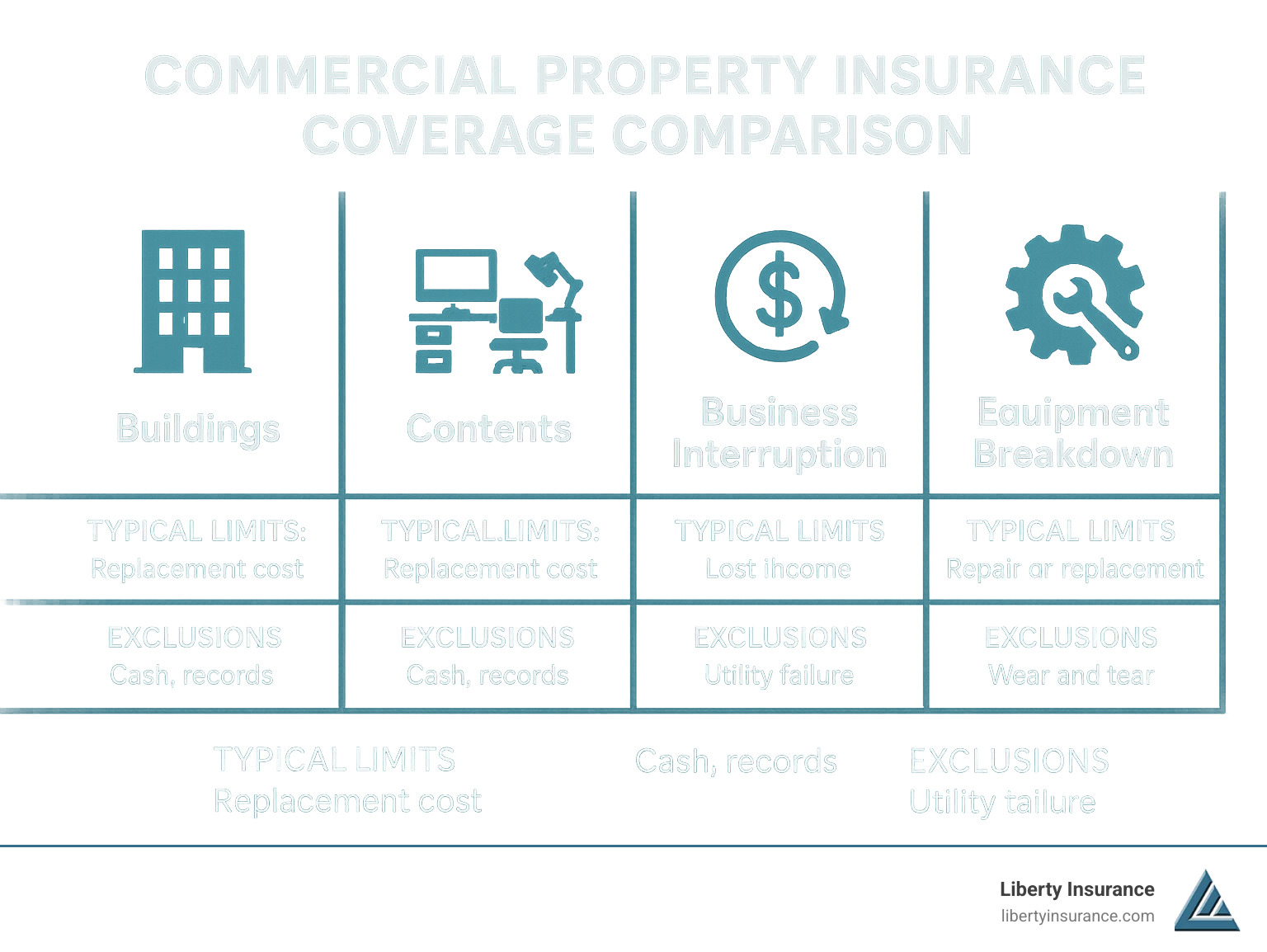
The commercial insurance landscape is on the brink of transformation, driven by technological advancements and shifting business environments. As the industry evolves, understanding these trends becomes crucial for businesses aiming to stay resilient and protected.
Adapting to these changes means embracing innovations that enhance risk management and improve customer experiences. Let’s delve into some of the most promising trends reshaping commercial insurance and how companies can gear up for the future.
Integration of Artificial Intelligence and Machine Learning
The integration of artificial intelligence (AI) and machine learning (ML) is revolutionizing how insurers assess risk and process claims. These technologies enable more accurate predictions and personalized policy offerings, leading to optimized pricing and improved customer satisfaction.
- AI-driven data analysis for better risk assessment.
- Enhanced fraud detection capabilities.
- Automated customer service through chatbots.
Adoption of Blockchain Technology
Blockchain is set to redefine transparency and efficiency in commercial insurance. By providing a decentralized ledger, it ensures secure, traceable transactions, reducing the risk of fraud and speeding up the claims process.
“Blockchain’s immutable record offers a new level of trust and security, streamlining claims and policy management.”
Telematics and Internet of Things (IoT) Adoption
The rise of telematics and IoT devices allows for real-time data collection, enhancing risk assessment and leading to personalized insurance solutions. Businesses can leverage these insights to minimize risks and negotiate tailored policies.
- Monitor fleet vehicles for safer driving practices.
- Track equipment usage to predict maintenance needs.
- Use building sensors for real-time risk management.
Cyber Insurance as a Standard Offering
With cyber threats escalating, cyber insurance is becoming a fundamental component of commercial policies. Businesses must prioritize comprehensive cyber protection to safeguard against data breaches and cyber attacks, ensuring business continuity.
| Traditional Insurance | Cyber Insurance |
|---|---|
| Focus on physical assets | Focus on digital threats |
| Standard risk factors | Evolving risk landscape |
Customized Insurance Solutions for Niche Markets
As industries become more specialized, there’s a growing demand for customized insurance solutions. Insurers are developing niche products to cater to specific industry needs, allowing businesses to obtain tailored coverage that aligns with their unique risk profiles.
“Customization in insurance ensures businesses receive the precise protection they need, adapting to their specific challenges.”
Final Thoughts
As the curtain falls on our exploration of commercial insurance, envision a future where your business thrives unencumbered by uncertainties. Armed with the knowledge of essential insurance types, you’ve unlocked the potential to safeguard your enterprise against the unpredictable tides of commerce. Embrace the power of informed decisions, and let your business soar to new heights, cushioned by the security of comprehensive coverage.